
"coffee farm environment"
5000 article(s) found

Introduction to the planting environment of Kenyan boutique coffee bean manor with delicious and slightly alcoholic aroma
There are two types of coffee farms in Kenya. One is a large plantation that covers an area of more than five acres, but the average elevation is low. In the case of Kenyan coffee, the coffee beans of the large farms are of medium quality. The best Kenyan beans come from small farms, most of which are located in the foothills or volcanic slopes above 5,000 to 6,000 feet. Each small farmer has a capacity of only 20 to 70 bags per season.

What is the growing environment of coffee beans at Manor Sevanigera in Selva Negra farm, Nicaragua? Niga
Professional coffee knowledge exchange more coffee bean information please pay attention to the coffee workshop (Wechat official account cafe_style) Nicaragua Selva Negra farm Sevanigera manor coffee bean growing environment? The cooking data of Nicaragua Selva Negra? Nicaragua is a famous coffee producing area. Coffee lovers must travel to Matagalpa (M), a major coffee province in Nicaragua.

Vietnamese Coffee Southeast Asian Coffee Flavor Vietnamese farming Vietnamese Coffee Brand
The growth environment of boutique coffee beans also has higher requirements. Generally grow at an altitude of 1500 meters or even more than 2000 meters above sea level, with appropriate precipitation, sunshine, temperature and soil conditions. Some world-famous coffee beans also have a special geographical environment, such as the alpine clouds in the Blue Mountains, the free shade provided by the afternoon clouds in Kona, and the volcanic ash soil in Antigua.

Colombia Las Cochas Las Cadges Farm introduces Colombian Coffee varieties
Professional coffee knowledge exchange more coffee bean information please pay attention to the coffee workshop (Wechat official account cafe_style) Colombia is the world's second largest coffee exporter, mainly produces Arabica coffee, and mainly washing treatment, excellent flavor quality, balanced, located in the northwest corner of South America, is the seaport of the Pacific and Atlantic Ocean, from south to north by the Andes Mountains

How many varieties of coffee are grown in Taiwan?
However, due to different climate, soil and other conditions, the growth of coffee in Zhaoqing encountered many problems. Mr. Lin, the manager of the coffee farm, told reporters that the coffee tree is not resistant to strong light and needs proper shade. If the light is too strong, it will inhibit its growth. Unlike the environment in which coffee trees are planted in Taiwan, it is an all-sunshine environment, and strong light may cause coffee flowers.

Coffee flavor and taste in Burundian coffee market introduces the origin of planting environment
Burundi coffee was introduced by Belgian colonists in 1930. Unfortunately, many of these farms are on the border with war-torn Rwanda, putting pressure on coffee production. Coffee in Burundi is now grown only on small farms. Almost all coffee produced in Burundi is Arabian coffee beans, while coffee from Ngozi

Rainforest Alliance certified Brazilian Datra Manor Information semi-washed Brazilian Minas Coffee Bean Flavor
For the exchange of professional baristas, please follow the Coffee Workshop (Wechat official account cafe_style) Rainforest Alliance certified Brazilian Datra Manor Information semi-washed Brazilian Minas Coffee beans Brazil Daterra Sunrise CERRADO Brazil Daterra is a Rainforest Alliance certified Brazilian bean. Datra Manor is located in the Cerrado area of the state of Minas Gerais, Brazil.

The planting Environment of Colombian Coffee Tree Manning Indonesia
The pure taste of Colombian coffee comes from Colombia's natural environment with the most favorable conditions for coffee growth. But beyond that, it is inseparable from the hard work of local growers. In Colombia, coffee cultivation has reached 1.07 million hectares, there are about 302000 coffee plantations in the country, and 30 to 40 per cent of the rural population depends directly on coffee production. Columby

Flavor characteristics of Guatemalan coffee beans the planting environment of Guatemalan coffee
In Guatemala, migratory birds are found in different ecosystems on coffee farms. Legume trees are like cuje. Gushi N, and chalum (INGA), used in Guatemala as the main shade tree type, are not only beneficial to coffee plants, but also to migratory birds foraging birds, attracting nectar from flowers or flowers from insects. Other species of trees, epiphytic plants of the pineapple family
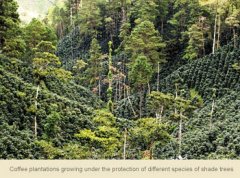
Guatemala Coffee planting Environment Guatemala Coffee cultivation
Faced with severe landscape changes and shrinking habitats, more than 90 species of migratory birds have found refuge in shaded trees. In early autumn (north temperate zone), birds such as Nashville warbler (Vermivoraruficapilla), wide-winged eagle (Buteo swordfish), crested flycatcher (Myiarchuscrinitus), lovely summer Donna Finch (Piranga bayberry), Raptors and others frequently shadow coffee.

Colombian coffee growing environment
The suitable climate in Colombia provides a real natural pasture for coffee. Coffee trees in Colombia are mainly cultivated in the Andes, on steep slopes about 1300 meters above sea level, where the annual temperature is about 18 degrees Celsius, annual rainfall is 2000 to 3000 millimeters, latitude 1-11 15 north, longitude 72-78 west, and the specific range of elevation can exceed 2.000 meters. By

Colombian coffee growing environment
The suitable climate in Colombia provides a real natural pasture for coffee. Coffee trees in Colombia are mainly cultivated in the Andes, on steep slopes about 1300 meters above sea level, where the annual temperature is about 18 degrees Celsius, annual rainfall is 2000 to 3000 millimeters, latitude 1-11 15 north, longitude 72-78 west, and the specific range of elevation can exceed 2.000 meters. By

Coffee Bean Farmer Manor in AF (Agropecuaria Farallones), Colombia
AF Farm is also called AF Company, and his full name is Agropecuaria Farallones. About AF Farm in the mountains southwest of Medellin in Antioquia, Colombia, there is a city called Hughton Boliwal, which has a unique greenhouse-like natural environment, which allows people here to inherit and share the traditional harvest brought by this environment for generations.

Coffee Bean Farmer Manor in AF (Agropecuaria Farallones), Colombia
AF Farm is also called AF Company, and his full name is Agropecuaria Farallones. About AF Farm in the mountains southwest of Medellin in Antioquia, Colombia, there is a city called Hughton Boliwal, which has a unique greenhouse-like natural environment, which allows people here to inherit and share the traditional harvest brought by this environment for generations.

What is organic coffee? Is the price of organic coffee high? Will organic coffee be healthier?
What makes coffee organic? Did you know that about 3/4 of all Fairtrade coffee is produced and produced organically? The main reason is that small family farmers are more likely to use organic farming techniques, while small family farmers are farmers served by fair trade practices. Organic farms do not allow the use of synthetic chemicals, fertilizers or pesticides in farming or production. If you mark the coffee

Introduction to the planting environment of coffee trees in Guatemala
The coffee planting base in Guatemala faces severe landscape changes and shrinking habitats, and more than 90 species of migratory birds have found refuge in shaded trees. In early autumn (north temperate zone), birds such as Nashville warbler (Vermivoraruficapilla), wide-winged eagle (Buteo swordfish), crested flycatcher (Myiarchuscrinitus), lovely summer Donna Finch (Piranga Waxberry), Raptors

The growing environment of Colombian coffee beans
The suitable climate in Colombia provides a real natural pasture for coffee. Coffee trees in Colombia are mainly cultivated in the Andes, on steep slopes about 1300 meters above sea level, where the annual temperature is about 18 degrees Celsius, annual rainfall is 2000 to 3000 millimeters, latitude 1-11 15 north, longitude 72-78 west, and the specific range of elevation can exceed 2.000 meters. By

Description of Burundian Coffee Flavor with spicy aftertaste introduction to the planting environment of the producing area
Burundi coffee was introduced by Belgian colonists in 1930. Unfortunately, many of these farms are on the border with war-torn Rwanda, putting pressure on coffee production. Coffee production in Burundi: Burundian coffee is now grown only on small farms. Almost all the coffee produced in Burundi is Arabian coffee beans.

Panamanian Coffee Farms
Pay attention to the coffee comment (Weixin Official Accounts vdailycom ) and find that the beautiful cafe opens its own small shop. The marine climate is a huge system covering the whole hemisphere. Some Caribbean currents originate as far away as Iceland, while some Pacific east-west currents originate half a world away off the coasts of Japan and Indonesia. In Panama, this is less than 100 kilometers wide.

Coffee growing Environment in Colombia Coffee Water Distribution Network cleaning
The suitable climate in Colombia provides a real natural pasture for coffee. Coffee trees in Colombia are mainly cultivated in the Andes, on steep slopes about 1300 meters above sea level, where the annual temperature is about 18 degrees Celsius, annual rainfall is 2000 to 3000 millimeters, latitude 1-11 15 north, longitude 72-78 west, and the specific range of elevation can exceed 2.000 meters. By